Height
Crown volume, flat roots and vertical length change the total silhouette.
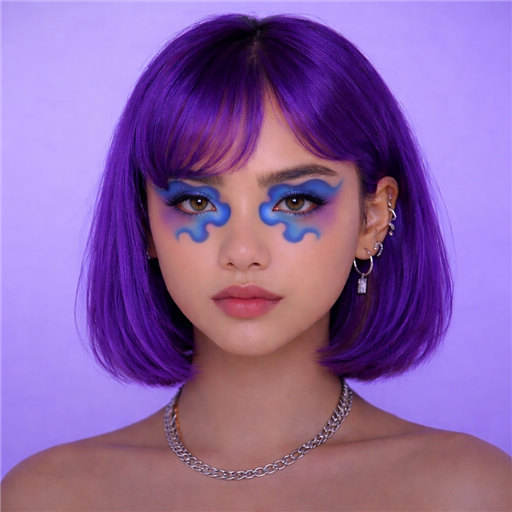 HairstyleChangeTry it on your photo
Hairstyles by face shape
Face-shape language can help describe proportion, but it should not decide what you are allowed to wear. These guides turn labels into concrete comparisons: height, width, fringe, part and perimeter.
Browse every hairstyle ↗A round outline has similar visual width and length with softer angles. Hair can create height, diagonals, framing or deliberate fullness — none is universally right.
Open the comparison guide ↗An oval outline is longer than it is wide with a softly curved jaw. Instead of treating it as a default, compare how much forehead, cheek and jaw emphasis you prefer.
Open the comparison guide ↗A square outline often has similar width through the forehead and jaw with more visible angles. You can echo that structure or create contrast with curves and broken lines.
Open the comparison guide ↗A heart-shaped outline is visually wider through the forehead or cheek area and narrower toward the chin. Fringe placement and lower-face volume change the balance quickly.
Open the comparison guide ↗An oblong outline reads longer than it is wide. The useful experiment is not to hide that length, but to compare how different widths, fringes and partings change the overall frame.
Open the comparison guide ↗What actually changes
Crown volume, flat roots and vertical length change the total silhouette.
Volume near the temples, cheeks or jaw shifts where the eye reads fullness.
Fringes, parts and blunt perimeters create horizontal, vertical or diagonal paths.
Tight sides, soft edges and disconnected lengths can echo or oppose facial angles.