01 / Read the look
What changes visually
These are design variables to compare, not rules about who can wear the look. Your preference and starting hair matter more than a generic verdict.
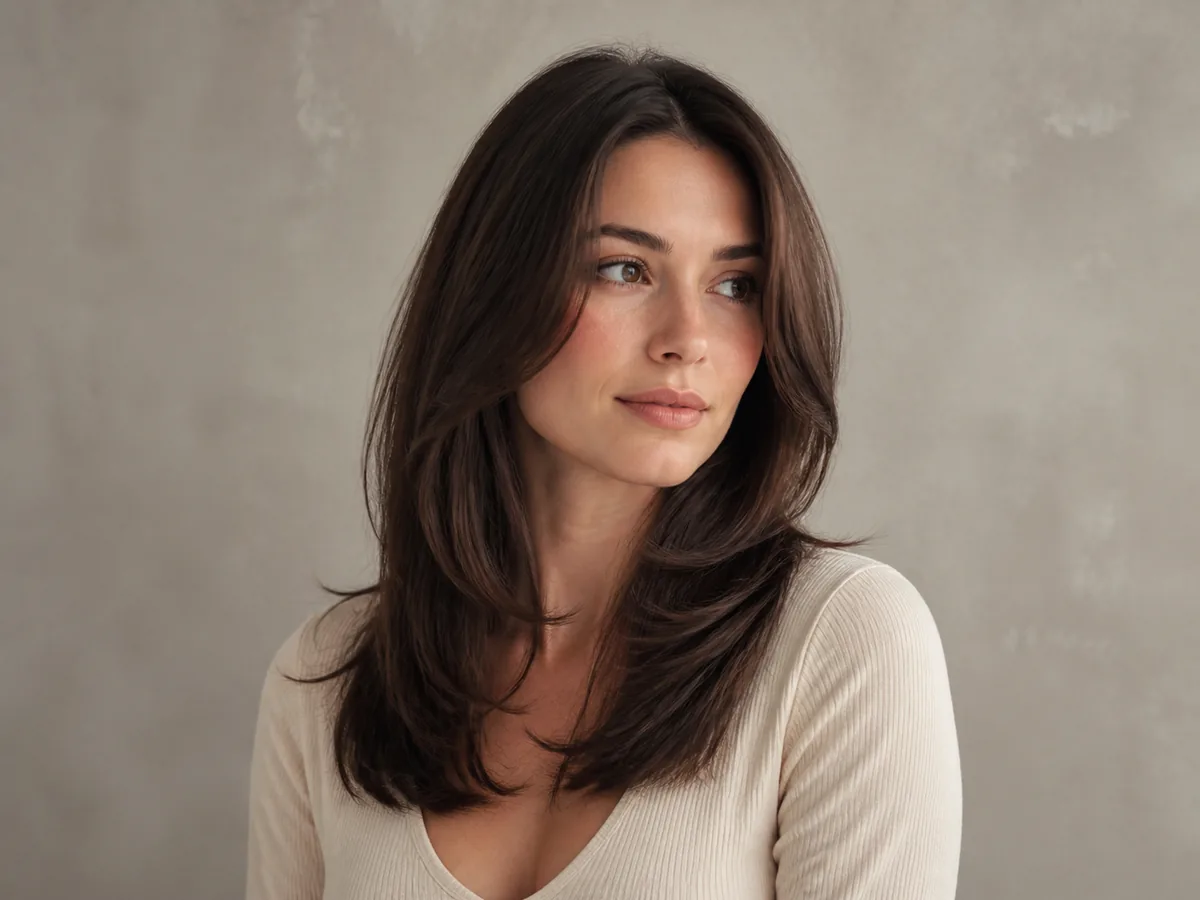
- The first prominent face-framing layers usually begin below the chin, preserving more uninterrupted length around the cheekbones than many butterfly cuts.
- Soft crown lift and a gradual taper toward the ends create the heart-like outline without a blunt or heavily disconnected layer pattern.
- A round-brush blowout makes the outline more obvious; on natural texture, the same cut can read as quieter movement rather than dramatic volume.
02
How Love Layers differ from nearby cuts
Love Layers belong to the broader long-layer family, but the named direction is more specific: blended layers start below the chin, volume sits higher in the silhouette and the ends visually narrow. Generic long layers can begin higher or lower and do not require that heart-like frame.
A butterfly cut commonly creates a more obvious split between shorter face-framing pieces and the long base. Love Layers keep the transition softer. The C-cut is a close reference, but a salon brief should describe placement and finish instead of relying on any one trend label.
03
Compare the cut and the finish separately
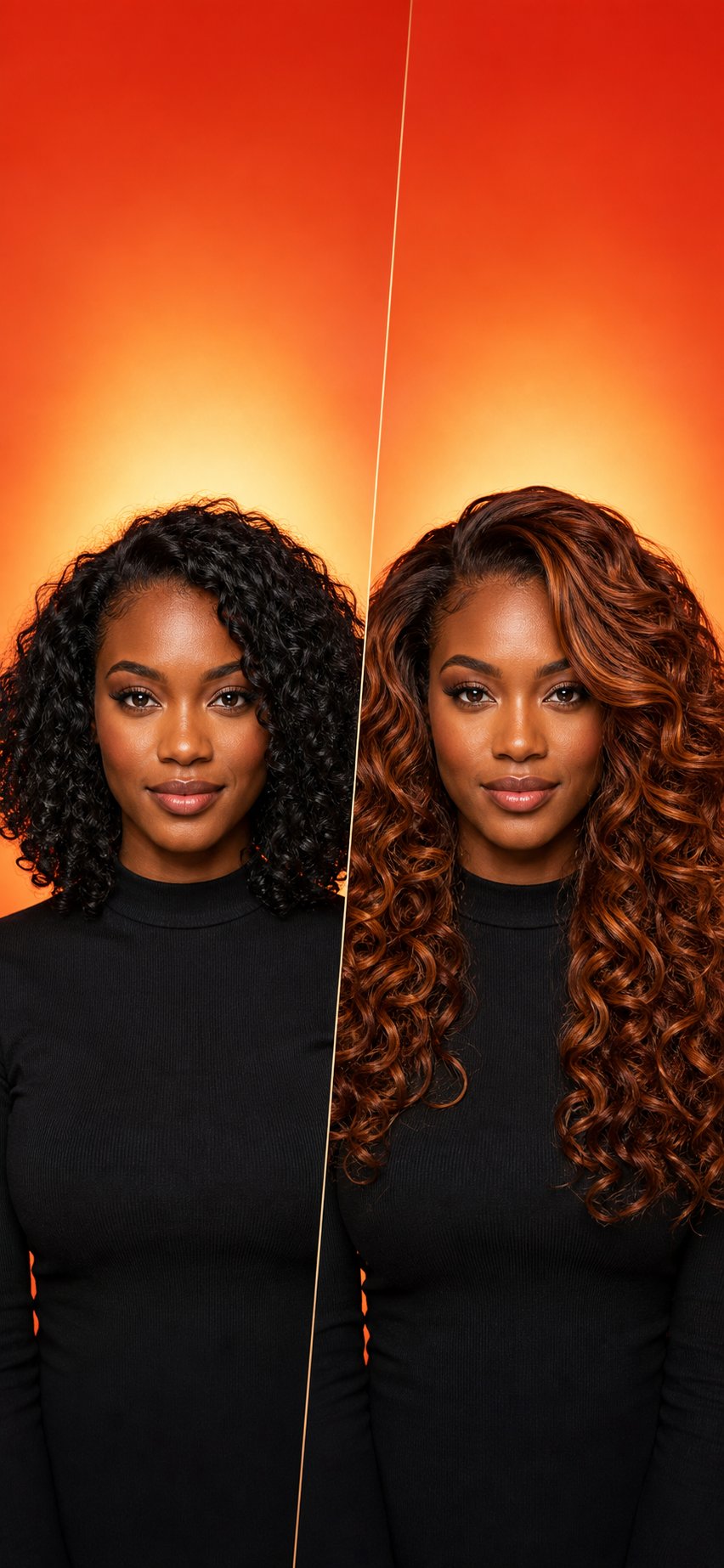
Start with a natural-texture preview to judge where the face frame begins, how much length remains and whether the ends still look substantial. Then compare the same shape with a styled blowout to see the maximum crown lift and curved movement.
The blowout is styling, not an automatic property of the haircut. If you normally air-dry, ask to see references with a similar texture and a quieter finish before deciding.
- Natural texture: softer outline and less visible separation
- Round-brush blowout: stronger lift and more obvious curved ends
- Soft Love Layers: fewer layers to preserve visual density at the perimeter
- Medium-length version: the same logic adapted without inventing extra length
04
Trade-offs to discuss before cutting
More internal layering can release weight and movement, but it can also make the ends look lighter. Fewer, longer layers keep a denser perimeter but produce a subtler heart-like outline.
Parting, starting length, density and natural texture all change the result. A center part shows the symmetry most clearly, while an off-center part can soften it without changing the underlying cut.
05
Styling and upkeep
Ask the stylist to demonstrate an everyday finish as well as the polished reference. If you use heat, choose a routine and products appropriate for your hair and follow the tool manufacturer's safety instructions.
Photograph the finished cut from the front and side. Those views are more useful at a later appointment than the trend name alone because they record the agreed layer placement and perimeter.
06
What an AI preview can and cannot show
An AI image can help compare a natural finish with a blowout, or Love Layers with a more separated butterfly shape, while keeping the decision on one photo. It cannot predict exactly how individual strands will settle after cutting, washing or styling.
Use the preview as a communication aid. Keep your face, current color and realistic starting length recognizable, then let a stylist assess the physical cut and adapt the reference.
Salon or barber brief
Describe the decision, not only the trend name
I want long, softly blended layers with the first prominent face-framing pieces beginning below my chin. Please preserve my minimum length and enough density at the ends, show where the crown lift will come from, and explain how the cut will look both on my natural texture and after a round-brush blowout.
Practical questions
Before you decide
Are Love Layers the same as a butterfly cut?
They overlap, but Love Layers usually keep the first prominent layer lower and blend the transition more softly. A butterfly cut often shows shorter, more separated face-framing layers.
Do Love Layers require a center part?
No. A center part makes the heart-like symmetry easiest to see, while a slight side part creates a softer, less even frame.
Will the haircut look like a blowout every day?
No. The dramatic curved silhouette comes partly from styling. On natural texture or after air-drying, the layers may appear quieter and less lifted.
Can an AI preview predict the exact salon result?
No. It can compare visual directions, but it cannot measure density, growth patterns, shrinkage or how the cut will behave after washing.
Evidence and methodology
Why this page exists
- US fall 2026 Love Layers coverage ↗Glamour US · published 2026-08-30 · checked 2026-08-31
- Professional hair-industry description and salon brief ↗Bangstyle · published 2026-08-19 · checked 2026-08-31
- International 2026 haircut roundup with AI preview notes ↗Perfect Corp · published 2026-08-07 · checked 2026-08-31
- Greek fall 2026 Love Layers coverage ↗Bovary · published 2026-08-16 · checked 2026-08-31
Useful limitation
An AI image cannot assess density, elasticity, previous chemical services, shrinkage or how a cut and color behave after washing. Use the preview to communicate a direction, then ask a qualified stylist or barber to judge feasibility.
How we research and correct trend pages ↗